
3D-Printed Insoles Beat Standard Diabetic Insoles at Offloading Foot Pressure, Study Finds
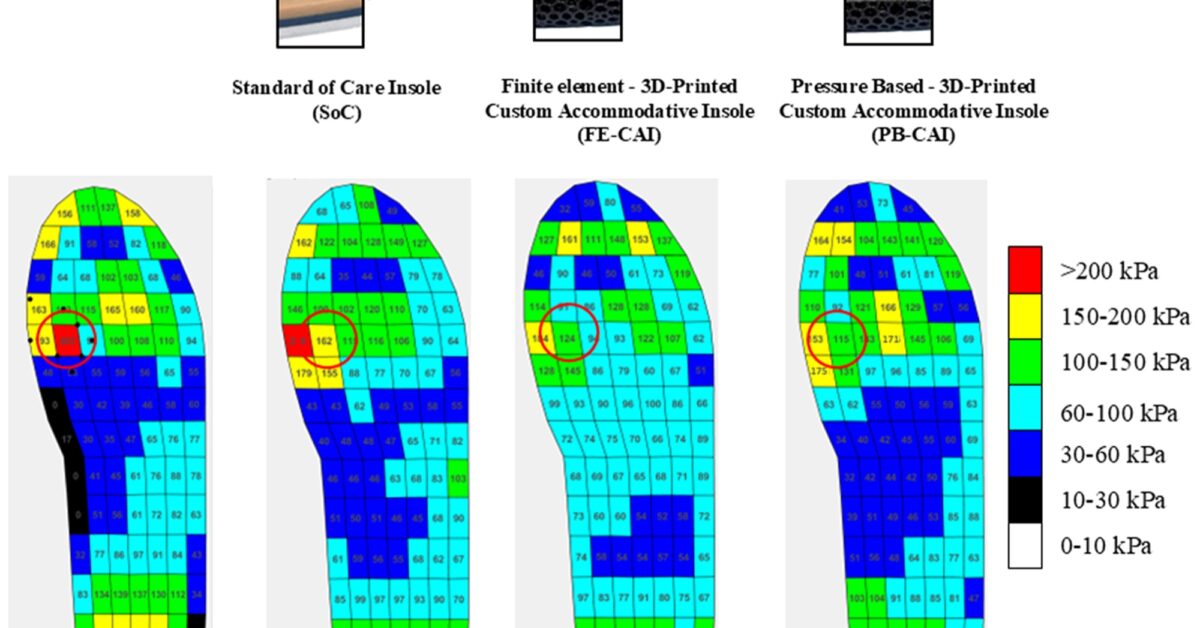

Custom 3D-printed insoles relieved dangerous pressure under the feet of people with diabetes better than the insoles clinics prescribe today, according to a study published in PLOS One on 19 November 2026. The research, led by Brittney C. Muir and colleagues and funded by the US Department of Veterans Affairs, tested two new insole designs on 25 veterans with diabetes.
The findings were also reported in Pakistan by the science website BioScience. OPPAK has read the original paper to explain what the study shows, and what it does not yet show, for patients and orthotists in Pakistan.
Why pressure under the foot matters
Diabetes can damage the nerves in the feet, so people may not feel a sore developing. Repeated high pressure on the same spot, often under the ball of the foot, can then break the skin and lead to an ulcer. The paper notes that diabetic foot ulcers are a major cause of lower-limb amputation, and cites research showing a five-year death rate of 30% after an ulcer first appears.
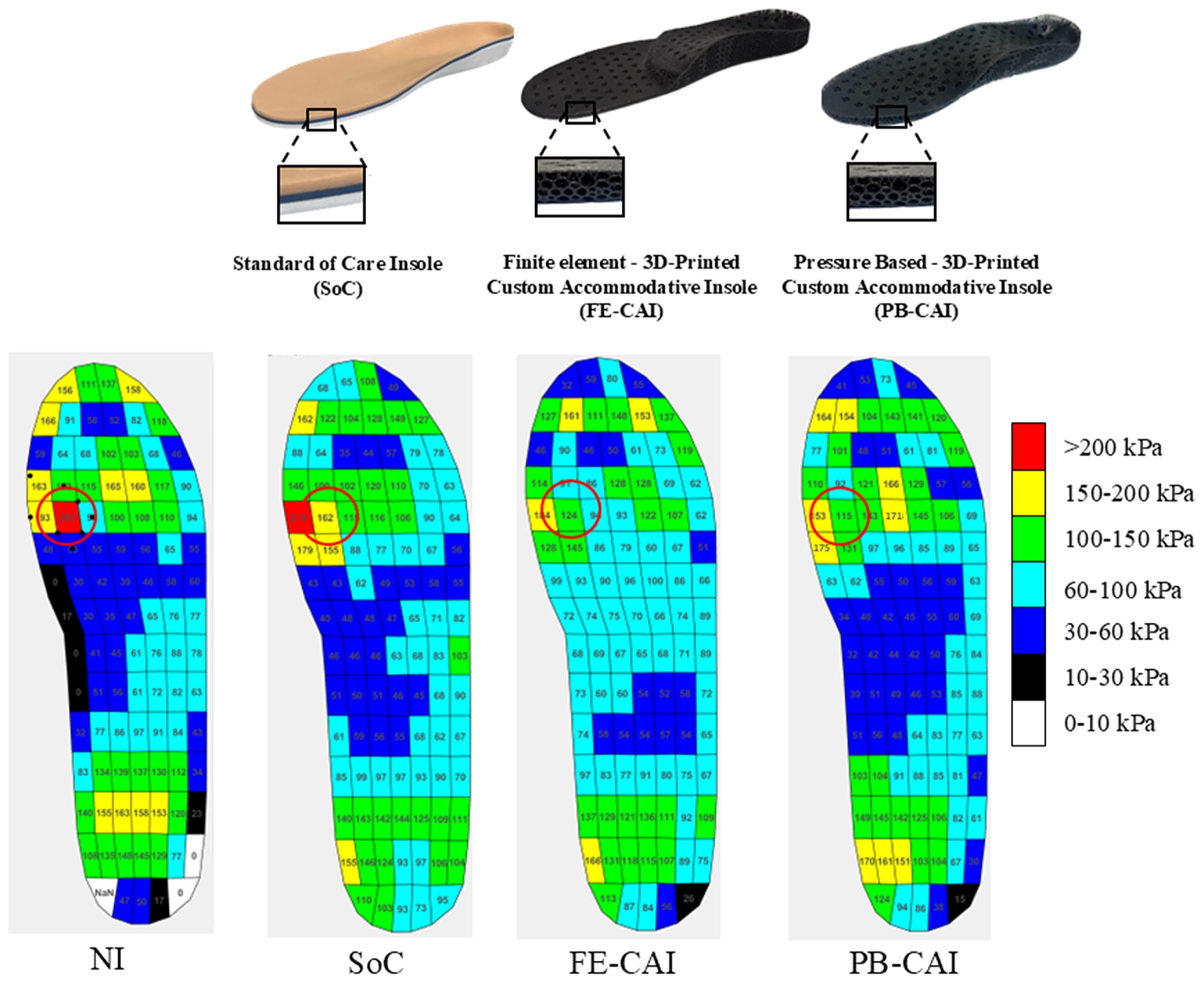
To lower that risk, people at high risk are often given custom accommodative insoles that spread the load across the foot. In this study, the standard-of-care insole was made from a foam impression of the foot, with an EVA base and a soft Plastazote-PORON top layer. Its weakness, the authors say, is that the materials are the same everywhere, which limits how precisely a clinician can target each patient’s high-pressure spots.
Two ways to print a smarter insole
3D printing allows an insole to be built from a lattice, a honeycomb-like inner structure whose softness can be changed from one area to another. The team tested two lattice designs, both printed in an elastic polyurethane and both starting from the same foam impression as the standard insole:
- Pressure-based insole (PB-CAI): the patient’s in-shoe pressure map is laid over the design, and every spot above 200 kilopascals (kPa) is printed with a softer, more open lattice to cushion it.
- Simulation-guided insole (FE-CAI): a computer model of the forefoot, using ultrasound measurements of the patient’s soft tissue, predicts pressure under the metatarsal heads. The height of a built-in metatarsal bar is raised until the model predicts a safe load below 200 kPa.
What the study found
The 25 participants (24 men and one woman, average age about 74) all had diabetes and at least one high-pressure area under the foot. Each walked in research shoes fitted with pressure sensors, with no insole, the standard insole and both 3D-printed insoles, in a randomised order that participants were not told.
- All three insoles reduced peak pressure and total pressure over time (the pressure-time integral) in the high-risk areas by more than 14% compared with no insole. According to the paper’s Table 1, peak pressure in those areas fell by 35% with the simulation-guided insole, 33% with the pressure-based insole and 14% with the standard insole.
- Compared with the standard insole, the pressure-based and simulation-guided insoles cut peak pressure by a further 22% and 24%, and the pressure-time integral by 19% and 35%.
- Peak pressure in the high-risk areas stayed below the 200 kPa threshold in 87% of cases with the simulation-guided insole and 81% with the pressure-based insole, compared with 48% for the standard insole and 6% with no insole.
- Only the simulation-guided insole also lowered pressure in the areas next to the high-risk spots, suggesting broader relief across the forefoot. No insole significantly increased pressure in those neighbouring areas.
Comfort still matters
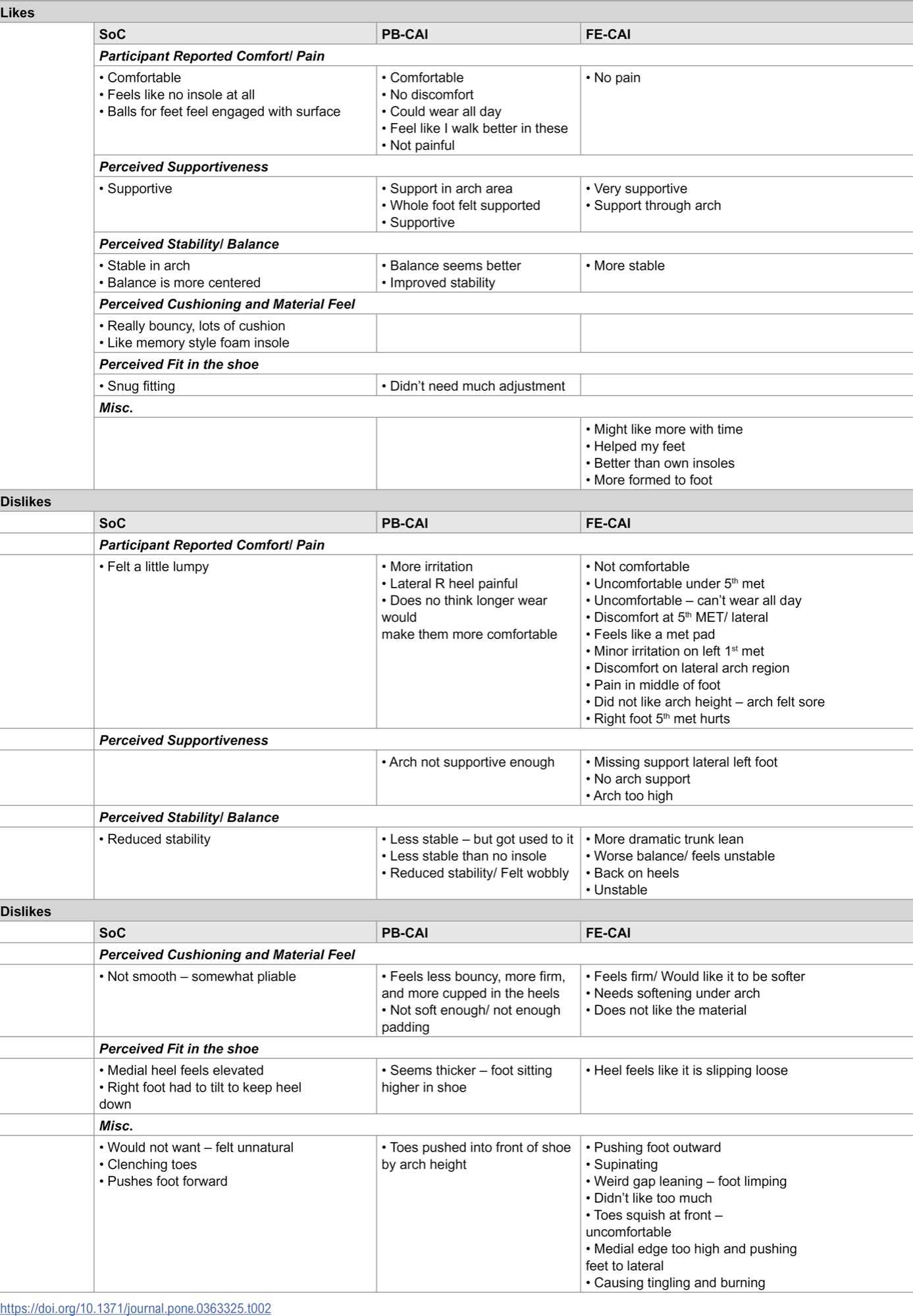
Better numbers did not automatically mean happier feet. Asked to pick a favourite, 10 of the 25 participants chose the pressure-based insole, nine chose the standard insole and six chose the simulation-guided one. Participants described the standard and pressure-based insoles as comfortable, but never used that word for the simulation-guided design. Some found the 3D-printed insoles firm, and heel slipping in the shoe was reported with all three.
The authors conclude that fit, support and material feel must improve across all insoles before clinical use. This matters because an insole only protects a foot if the patient actually wears it.
Important limits
This was a short laboratory test of walking, not a long-term trial. It did not measure whether the insoles prevent ulcers, and the authors say long-term effects of real-world use remain unknown. The in-shoe sensors could shift between tests, the study measured only downward pressure (not shear), and in some cases pressure still went above 200 kPa with the 3D-printed insoles. The participants were mostly older male US veterans, so results may differ in other groups.
The team plans to smooth the stiffness changes around the cushioned zones, improve shoe fit, and study the insoles during everyday wear and activities such as climbing stairs.
What this means for Pakistan
Diabetic foot disease is a serious concern in Pakistan, and OPPAK has reported experts’ views that AI could help prevent half of diabetes-related amputations in the country. Digital tools such as foot scanning, pressure mapping and 3D printing are also attracting interest locally; OPPAK covered Pakistani and Tajik students who won a prize for 3D-printed foot insoles.
For orthotists, the study’s main lesson is practical: measure, do not guess. Pressure mapping can show where a foot is at risk, and insoles can then be designed to relieve those exact spots. For patients and families, the basics remain the same. Check your feet every day, wear the footwear and insoles your orthotist prescribes, control your blood sugar, and seek help early for any redness, blister or wound. Read OPPAK’s guide Diabetic Foot Care: Protecting the Feet That Cannot Feel Pain for more.
This article is general information, not medical advice. Anyone with diabetes should have their feet checked by a doctor and a qualified orthotist. If you work with diabetic patients, share this research with your team and tell us in the comments whether you use pressure mapping in your clinic.
Sources
OPPAK is Pakistan's dedicated hub for orthotics and prosthetics since 2006— connecting students, professionals, patients and employers with credible news, education pathways, jobs, and success stories.
Related in 3D PRINTING
Ottobock Introduces 3D-Printed Silicone Liner for More Personalized Prosthetic Fit
University of Melbourne Startup Develops Adjustable Lightweight 3D-printed Bionic Arm

Leave a Reply