
University of Melbourne Startup Develops Adjustable Lightweight 3D-printed Bionic Arm
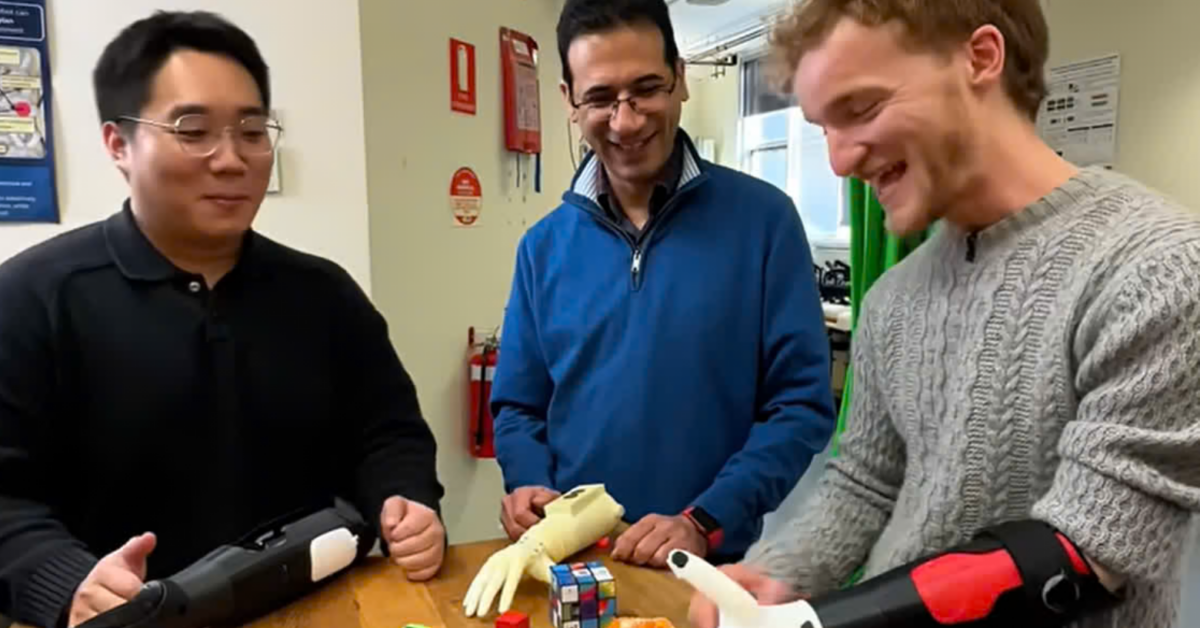

Lightweight 3D-printed hand and self-adjustable socket could improve comfort, fit and control for upper-limb prosthetic users
A new bionic prosthetic arm developed by researchers at the University of Melbourne could offer a new approach to some of the persistent challenges faced by people using upper-limb prostheses.
The technology, developed by startup Meablex and led by Dr Alireza Mohammadi, combines a lightweight 3D-printed prosthetic hand with an adjustable, sensorised socket. The system is designed to accommodate changes in residual-limb volume while providing an alternative method of detecting muscle activity.
A socket that adapts to the user
Socket fit is one of the most important factors affecting prosthetic comfort and function. Residual-limb volume can change throughout the day because of exercise, temperature, activity and natural swelling.
For children, the challenge is even greater because their limbs change as they grow, often requiring sockets to be modified or replaced.
The Meablex concept allows the user to manually adjust the socket’s tightness. This could provide greater flexibility when limb volume changes and potentially reduce the need for frequent adjustments or refitting.
For prosthetists, the development highlights an important direction in socket design: creating systems that can accommodate controlled changes in residual-limb volume while maintaining appropriate suspension, comfort and tissue protection.
Magnetic sensing instead of conventional EMG
The system also takes a different approach to prosthetic control.
Many myoelectric prostheses use electromyography (EMG) to detect electrical signals generated by residual-limb muscles. However, sweat, electrode placement and changes in socket fit can affect signal quality.
Meablex uses magnetic sensors to detect subtle muscle movements. According to the development team, the sensors are intended to be less affected by sweat than conventional skin-surface electrical sensors.
Combined with a lightweight 3D-printed hand, the system aims to provide more dependable control during everyday activities.
Clinical trials planned
The technology is still under development, with clinical trials planned for later in 2026. The team is targeting a potential commercial launch in 2027, subject to successful clinical validation and regulatory approval.
The project has also received A$470,000 through Australia’s Economic Accelerator Ignite program to support further development, clinical validation and commercialisation.
The upcoming trials will determine whether the adjustable socket and magnetic sensing technology deliver the expected benefits in real-world prosthetic use.
If successful, the Meablex project could represent an important step toward more adaptive, lightweight and user-centred upper-limb prostheses—where the prosthesis is better able to respond to the changing needs of the person wearing it.
Reference
This article was independently rewritten for OPPAK.com based on the original report published by The Brighter Side of News:
“University of Melbourne start-up has developed a new, cutting-edge bionic prosthetic,” by Joshua Shavit, published July 27, 2026.
Original source: The Brighter Side of News.
OPPAK is Pakistan's dedicated hub for orthotics and prosthetics since 2006— connecting students, professionals, patients and employers with credible news, education pathways, jobs, and success stories.
Related in 3D PRINTING
Ottobock Introduces 3D-Printed Silicone Liner for More Personalized Prosthetic Fit
Is 3D Printing the End of Traditional O&P?

Leave a Reply