
AI Could Help Prevent Half of Diabetes-Related Amputations in Pakistan, Experts Say

KARACHI — Artificial intelligence (AI) could potentially help prevent up to half of the nearly 300,000 diabetes-related amputations reportedly carried out each year in Pakistan by enabling earlier detection, assessment and treatment of diabetic foot wounds, healthcare experts said.
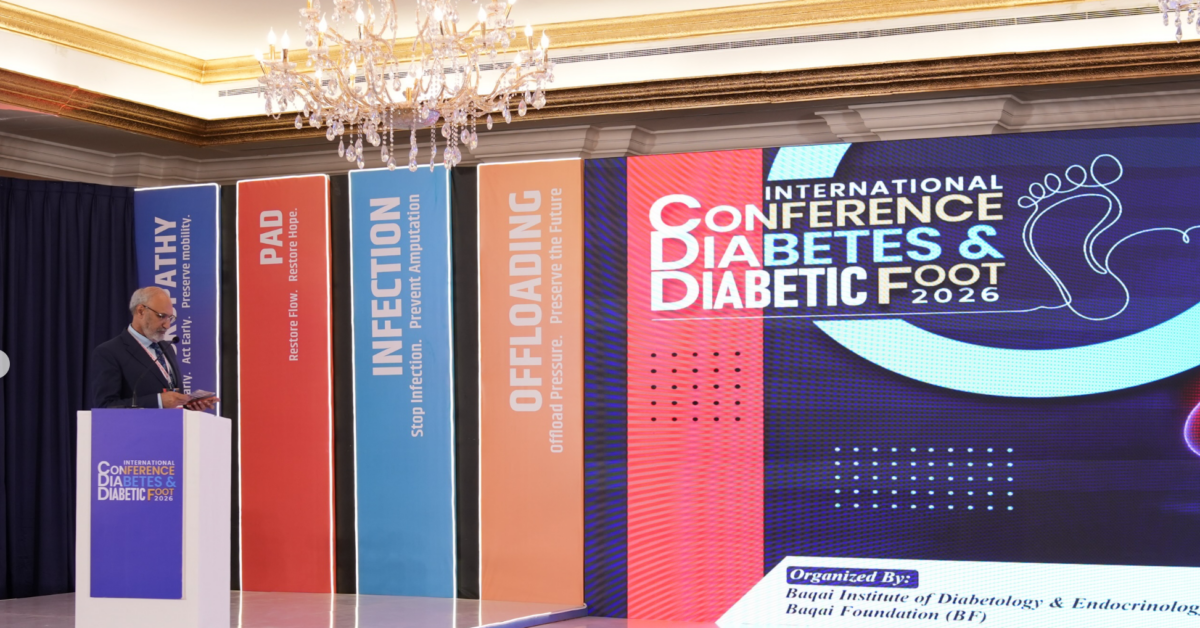
The issue was highlighted during the concluding session of the International Conference on Diabetes & Diabetic Foot 2026 in Karachi, where specialists discussed the growing burden of diabetic foot disease and the need for faster, more coordinated care.
Consultant orthopaedic surgeon and AI/telehealth strategist Dr Suhail Chughtai presented a concept for an AI-enabled digital diabetic foot clinic designed specifically for the Pakistani healthcare environment.
Under the proposed model, patients could register through a digital platform, upload photographs of their foot wounds and provide relevant medical information. AI-assisted systems could then analyse the images to identify wounds, determine their boundaries and approximate size, examine tissue and colour changes, and compare photographs taken over time to monitor healing.
The technology could also generate an initial risk assessment and provide wound-care guidance. Patients considered to be at moderate or high risk could be referred or digitally connected to relevant specialists, including diabetologists, podiatrists and wound-care professionals.
According to Dr Chughtai, integrating AI with telemedicine could create a continuous care pathway—from initial screening and automated assessment to specialist referral, treatment, follow-up and monitoring. Such a system could be particularly valuable for patients who face difficulties accessing specialist diabetic foot services.
Prof. Zahid Miyan, Director of the Baqai Institute of Diabetology and Endocrinology (BIDE), said Pakistan was facing a significant burden of diabetes-related foot complications. He cited an estimated 300,000 diabetes-related amputations annually and said many could potentially be avoided through early recognition of foot problems, timely referral and appropriate treatment.
He also highlighted the scale of diabetic foot disease, noting that millions of Pakistanis are affected by diabetes-related foot wounds and that diabetic neuropathy can significantly increase the risk of unnoticed injuries. Reduced sensation in the feet may prevent patients from recognising wounds until they have developed into serious infections or other complications.
Prof. Miyan also announced the launch of a 24-hour diabetic foot helpline and said Pakistan’s first two-year postgraduate diploma specifically focused on diabetic foot care is scheduled to begin its first batch in January 2027.
Conference organising committee chairman Dr Muhammad Saif Ul Haque stressed that diabetic foot management cannot be effectively addressed by a single medical specialty. He called for a multidisciplinary approach involving timely diagnosis, appropriate treatment and coordinated referral between healthcare professionals.
Experts at the conference also discussed the potential role of continuous glucose monitoring (CGM) in diabetic foot management. Prof. Tariq Waseem noted that CGM can provide information about glucose fluctuations and the amount of time patients remain within their recommended glucose range—information that may complement traditional HbA1c measurements.
Prof. Qamar Masood said CGM could help improve glycaemic control and give patients a clearer understanding of their glucose patterns, while Dr Somia Iqtedar highlighted the value of continuous monitoring in supporting evidence-based clinical decisions.
Pakistan Endocrine Society President Dr Ali Asghar called for diabetes care strategies that address both physical and psychological wellbeing. Other speakers emphasised the importance of giving patients sufficient consultation time, understanding their concerns and responding to the wider complications associated with diabetes.
The conference also highlighted the severe consequences of diabetic foot disease. Data presented during the event indicated that five-year mortality can exceed 40 percent following minor amputation and 50 percent following major amputation, underscoring that diabetic foot disease is not only a limb-threatening condition but can also become life-threatening.
For Pakistan, where access to specialised diabetic foot services remains uneven, the integration of AI, telemedicine, remote wound monitoring and multidisciplinary care could offer a new approach to early intervention.
However, experts emphasised that technology should complement—not replace—qualified healthcare professionals. Early clinical assessment, appropriate wound care, infection management, vascular evaluation, offloading and timely specialist intervention remain essential to preventing avoidable amputations.
The growing interest in AI-enabled diabetic foot care reflects a broader shift in healthcare towards early detection, remote monitoring and personalised intervention. If implemented responsibly and supported by trained professionals, such technologies could become an important tool in Pakistan’s efforts to save limbs and improve outcomes for people living with diabetes.
OPPAK is Pakistan's dedicated hub for orthotics and prosthetics since 2006— connecting students, professionals, patients and employers with credible news, education pathways, jobs, and success stories.

Leave a Reply