
Pediatric Orthotics: Helping Children Move, Grow and Take Part
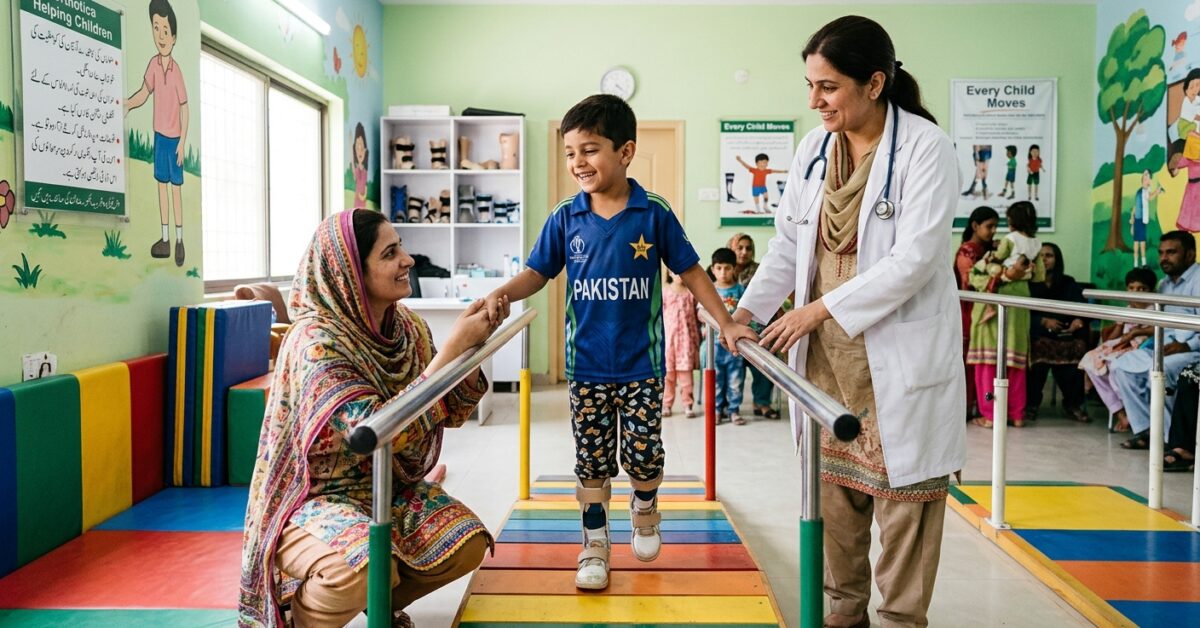

Children are not small adults. Their bones are still forming, their muscles and joints are adapting to new demands, and their size can change noticeably within a few months. An orthosis prescribed for a child therefore has to do more than support a body part. It must guide healthy growth, respect the child’s daily life, and be reviewed often enough to stay useful. That is the heart of pediatric orthotics.
What a pediatric orthosis is, and who may need one
An orthosis is an externally worn device that supports, aligns, protects or improves the function of part of the body. In children it might be a small insert inside a shoe, a plastic brace that supports the ankle, a rigid or flexible jacket for the spine, a harness for a baby’s hips, or a soft helmet-like band that shapes a baby’s skull.
Referral usually comes through a pediatrician, orthopedic surgeon, neurologist or physiotherapist, and the orthotist works as part of that wider team. The reasons vary widely. Some children are born with a condition such as clubfoot or hip dysplasia. Others have a neurological or muscular condition such as cerebral palsy, spina bifida or muscular dystrophy, where weakness or stiffness affects standing and walking. Some develop a spinal curvature during adolescence, and others need protection or alignment after surgery or injury.
It is equally important to say what orthoses are not for. Many variations in children’s feet and legs are part of normal development. Flexible flat feet in young children are very common and often cause no problem. Mild in-toeing or a wide walking pattern in toddlers frequently settles with time. A good clinician will tell you when watching and waiting is the right plan, rather than prescribing a device out of habit.
Common devices and what they do
Foot orthoses are among the most frequently used. They range from simple insoles to more structured supports that hold the heel and arch in a better position. They are chosen when a child has pain, fatigue, or a foot posture that interferes with walking, and the design depends on whether the foot is flexible or stiff.
Ankle foot orthoses, often called AFOs, extend from the foot up the back or front of the lower leg. They are widely used for children with cerebral palsy, spina bifida and other conditions that affect ankle control. Depending on the child, an AFO may prevent the foot from dragging, stabilize the ankle during standing, keep muscles gently stretched, or give a more efficient walking pattern. Some are rigid, some allow controlled movement at the ankle, and the right choice depends on careful assessment of how the child actually walks and which muscles are working.
For clubfoot, orthotic care comes after the corrective phase of treatment, which is usually serial casting following the Ponseti method. Once the foot has been corrected, a foot abduction brace holds it in position to reduce the chance of the deformity returning. This stage asks a lot of families, because the brace is worn for long periods in the early months and then typically at night and nap time for several years. Families are often tempted to relax the routine once the foot looks good, yet consistent bracing is widely recognized as one of the most important factors in preventing relapse.
In infants with hip dysplasia, a Pavlik harness is commonly used to hold the hips in a position that encourages the joint to develop properly. It is a soft device but a serious one, and it needs to be fitted and monitored by experienced clinicians.
Spinal bracing is used mainly for adolescents with idiopathic scoliosis whose curves are moderate and who still have growth remaining. The aim is to stop the curve from progressing, not to straighten it permanently. The BrAIST trial, published in the New England Journal of Medicine in 2013, found that bracing lowered the chance of a curve reaching the level where surgery is considered, and that children who wore their braces for more hours did better. That finding matches what clinicians see in practice: a well-made brace only works if it is worn as prescribed.
Cranial orthoses are used for some babies with moderate to severe positional plagiocephaly, where the skull has become flattened on one side. Many mild cases improve with changes in positioning and supervised tummy time, so a helmet is usually considered only when those measures are not enough and the baby is still in the period of rapid skull growth.
Making an orthosis work in everyday life
A well-designed orthosis can still fail if it does not fit into the child’s routine. Comfort and skin care matter most. A thin, seamless cotton sock worn under a brace helps absorb moisture and reduces friction. Skin should be checked whenever the device is removed, particularly over bony areas. Mild redness that fades soon after removal is usually expected, while marks that persist, blisters, or any broken skin should be reported to the orthotist promptly rather than left until the next appointment.
Children also outgrow devices, sometimes sooner than parents expect. Signs include toes pressing against the end of the brace, straps that no longer sit properly, red pressure marks in new places, or a child who used to tolerate the device and suddenly refuses it. Regular reviews, often every few months in fast-growing children, allow adjustments or replacement before problems develop.
Shoes deserve attention too. Footwear that opens wide, has a firm heel and allows the orthosis to sit properly inside makes fitting far easier. A shoe that is too small or too shallow can undo the benefits of an otherwise excellent device.
The emotional side is easy to overlook. A child who feels different from classmates may resist wearing a brace, especially in adolescence. Involving children in choices such as colors or patterns, explaining in simple words what the device does, and speaking with teachers so that school staff understand its purpose can make a real difference. Wearing schedules that begin gradually, rather than all day from the first day, also help children adapt. Most children adjust well when they feel listened to and supported.
A shared effort
Good pediatric orthotic care depends on partnership. The orthotist contributes assessment, measurement or scanning, design, fabrication and fitting. The physician or surgeon provides the diagnosis and the wider treatment plan. Physiotherapists and occupational therapists help the child use the device well, and parents provide the daily consistency that no clinic visit can replace. Newer tools such as digital scanning and 3D printing are becoming part of the workflow in some centers, and they may improve speed and precision, but they do not replace clinical judgment or the need for follow-up.
If you are a parent who has been told your child may need an orthosis, ask what the device is meant to achieve, how long it should be worn each day, what signs of a problem to watch for, and when the next review will be. If you are a clinician, remember that the family’s understanding is part of the treatment. The best-made brace does little good in a drawer.
This article is intended as general information and does not replace an individual assessment by a qualified orthotist or physician.
Further reading
Weinstein SL, Dolan LA, Wright JG, Dobbs MB. Effects of bracing in adolescents with idiopathic scoliosis. New England Journal of Medicine. 2013;369:1512-1521.
Ponseti IV. Congenital Clubfoot: Fundamentals of Treatment. Oxford University Press; 1996.
OPPAK is Pakistan's dedicated hub for orthotics and prosthetics since 2006— connecting students, professionals, patients and employers with credible news, education pathways, jobs, and success stories.
Leave a Reply