Beyond Devices, Restoring Steps: ICRC Outreach Camp Brings Dignity and Mobility to Bhimber
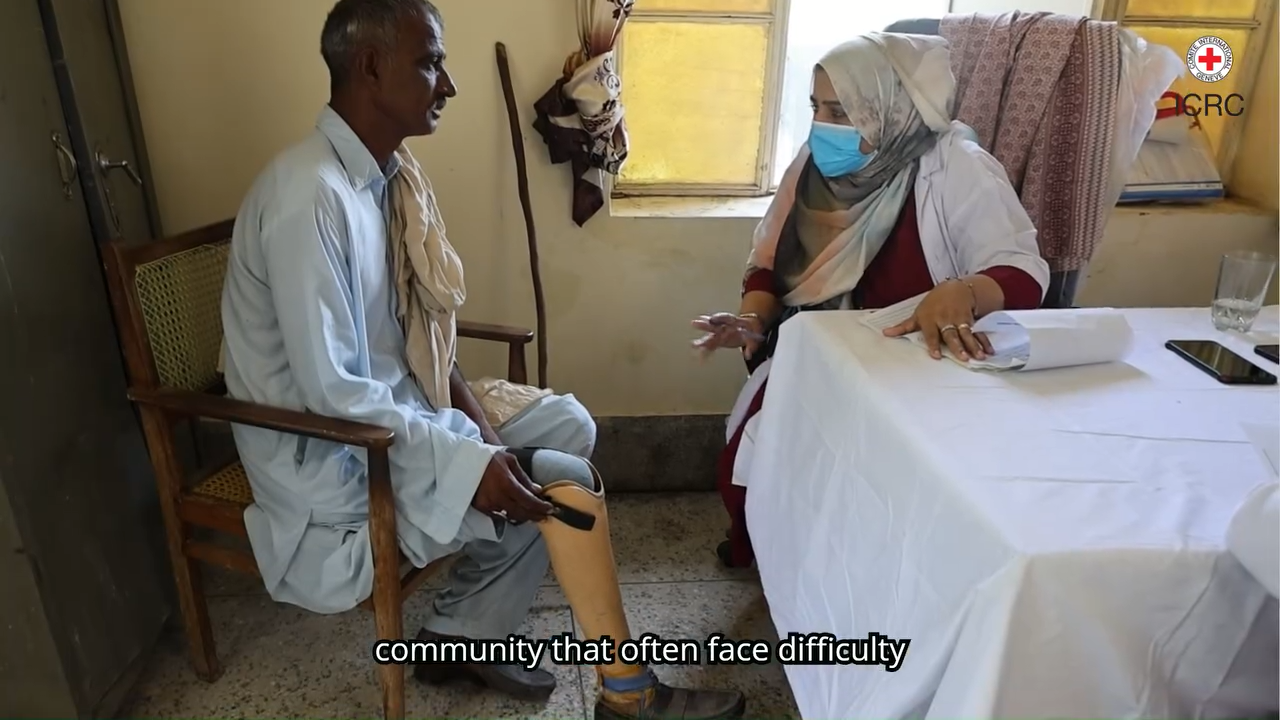

BHIMBER, AZAD JAMMU AND KASHMIR – – In a quiet room at the THQ Hospital in Samahni, a physical therapist gently guides an elderly man’s leg through a series of exercises. Nearby, an orthotist prosthetist makes a final adjustment to the alignment of a prosthetic limb. These are the quiet, determined moments of transformation that defined a recent week-long outreach effort in District Bhimber.
From August 25th to 30th, 2025, the International Committee of the Red Cross (ICRC), in partnership with the Muzaffarabad Physical Rehabilitation Center (MPRC), brought essential physical rehabilitation services directly to the doorsteps of remote communities. The mobile camp, stationed at six locations including DHO Office Bhimber, THQ Samahni, and RHU Poona, served as a crucial bridge to hope for persons with physical disabilities.
The program offered a comprehensive continuum of care, from initial registration and assessment to the provision of mobility aids like crutches and specialized shoes for conditions like clubfoot. A key focus was on restorative services, including amputation pre-prosthetic rehabilitation and the critical repair of existing prosthetic and orthotic devices, with complex cases referred to the main MPRC in Muzaffarabad for ongoing support.
Footage from the camp reveals the profound personal impact of this initiative. ICRC staff are seen working one-on-one with beneficiaries, their interactions marked by patience and professionalism. In one scene, a young man receives a new prosthetic limb. The careful fitting and subsequent adjustment—a process requiring precise technical skill—culminates in the individual taking tentative, then confident, steps, a journey from dependence to mobility witnessed in a matter of minutes.
“The main goal of organizing this camp is to provide services to people with disabilities at their doorstep,” explains an ICRC staff member in the video. “There are people who cannot travel to Muzaffarabad due to financial or other constraints. We are providing them with physiotherapy, and we are also providing them with assistive devices like wheelchairs, crutches, and walkers.”
The video also highlights the less visible but equally vital services, such as physiotherapy. Patients are guided through targeted exercises designed to strengthen muscles and improve mobility, a fundamental step for both new amputees preparing for a prosthesis and those recovering from long-term injuries.
For many beneficiaries, the cost and difficulty of travel to a major city are the biggest obstacles to care. By eliminating this hurdle, the camp ensured that life-changing support reached those who needed it most. The relief on the faces of family members is as telling as that of the patients themselves, underscoring how disability affects entire families.
“We are very thankful to the ICRC for organizing this camp here,” says one beneficiary, his gratitude echoing the sentiments of many. “We are getting everything we need right here, which saves us the immense trouble and expense of travel.”
The collaboration between the ICRC, the MPRC, and local health authorities demonstrates a sustainable model for delivering specialized humanitarian aid. By integrating with the existing health infrastructure at the tehsil level, the effort ensured local buy-in and created a seamless referral pathway for future care.
While the camp has concluded, its legacy is measured in the confident steps of a young man with a new prosthetic, the supportive click of crutches aiding a steady walk, and the relieved smiles of families seeing their loved ones regain independence. It was a week that proved mobility is not just about movement—it’s about dignity, hope, and a path forward.
OPPAK is Pakistan's dedicated hub for orthotics and prosthetics since 2006— connecting students, professionals, patients and employers with credible news, education pathways, jobs, and success stories.
Related in News & Updates
P&O Community of Pakistan Mourns the Loss of Murad Ali
CM Sindh Visits Rotary Orthotics Prosthetic Centre Ahead of Sub-National Immunization Days (SNIDs) polio campaign
Leave a Reply