
First U.S. Patient Receives Bionic Arm Connected to Bone, Nerves and Muscles
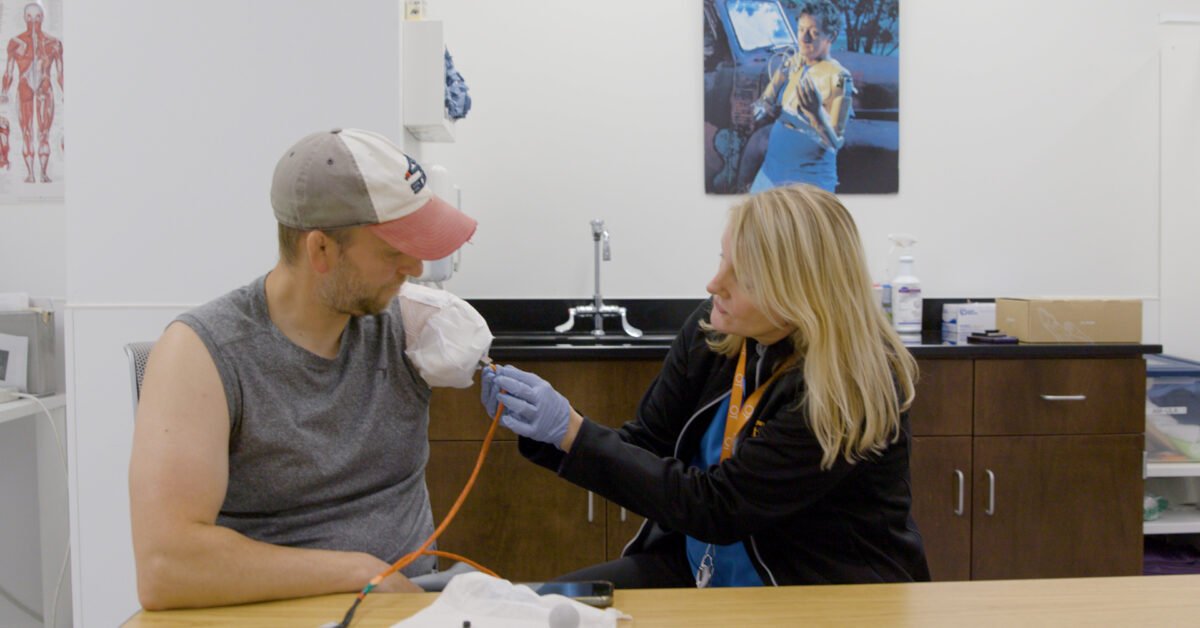

A man from the Chicago area is set to become the first person in the United States to receive a bionic arm connected directly to his bone, nerves and muscles, according to Shirley Ryan AbilityLab. The prosthesis is designed to be controlled by his own neural signals and to return sensory feedback in real time.
He lost his left arm above the elbow in a construction site accident in 2016. He is now the first participant in a five year osseointegration clinical study led by Levi Hargrove, PhD, director of the Regenstein Foundation Center for Bionic Medicine at Shirley Ryan AbilityLab and professor of physical medicine and rehabilitation at Northwestern University Feinberg School of Medicine.
On July 15, a combined team of plastic and orthopedic surgeons carried out an eight hour operation at Northwestern Memorial Hospital. The team was led by Jason Ko, MD, vice chair of clinical operations in the Department of Surgery at Northwestern Medicine, and Terrance Peabody, MD, chair of the Department of Orthopaedic Surgery at Northwestern Medicine. They implanted a titanium fixture into the bone of the man’s residual limb and placed electrodes on his muscles and around his nerves. The procedure was performed under an investigational device exemption from the U.S. Food and Drug Administration. The man had also undergone an earlier surgery in preparation.
For readers unfamiliar with the technique, osseointegration means anchoring a metal implant into the remaining bone. Over several months, the bone grows into the surface of the implant until it becomes a structural extension of the skeleton. A second component then passes through the skin, so the prosthesis attaches directly to the bone. This removes the socket that conventional prostheses depend on, along with the discomfort, poor fit and limited range of motion that can come with it.
The system used in the study is called e-OPRA, short for Enhanced Osseoanchored Prostheses for the Rehabilitation of Amputees. It builds on this foundation by carrying signals through the same implant. Electrodes on the muscles record the electrical activity produced when a person intends to move, and those signals are decoded to operate the prosthesis. Separate electrodes placed around peripheral nerves deliver stimulation that creates sensations perceived as coming from the missing limb. The researchers will assess whether this feedback improves how well, and how naturally, participants can use the arm.
“This is about the interface, not the arm,” Dr. Hargrove said. He explained that e-OPRA addresses two of the hardest problems in the field together: it fixes the prosthesis to the skeleton, and it places electrodes on muscles and around nerves, where signals are clean, stable and able to travel in both directions.
According to the team, the study is the first to combine osseointegration, targeted muscle reinnervation (TMR), and pattern recognition control using implanted electromyography sensors and nerve cuff electrodes for sensory feedback. TMR is a surgical technique developed in 2002 by collaborators at Shirley Ryan AbilityLab and Northwestern Medicine. It redirects nerves that once served the missing hand to remaining muscles in the residual limb, giving those nerves a place to produce signals a prosthesis can read. Depending on each participant’s history, surgeons will perform TMR at the time of implantation or revise nerve transfers done earlier.
Eight participants will be enrolled. Rickard Brånemark, MD, PhD, who developed the OPRA osseointegrated implant system on which e-OPRA is built, travelled from Sweden and was in the operating room on July 15 to give technical guidance. He is chairman of the board of Integrum AB, whose U.S. subsidiary, Integrum Inc., is a study partner. Researchers at the University of Chicago, led by Charles Greenspon, PhD, are responsible for the sensory feedback component. The work is supported by an $8.7 million award from the National Institute of Neurological Disorders and Stroke, part of the National Institutes of Health.
Dr. Ko, the lead study investigator for Northwestern Medicine, described sensory feedback to the missing hand as what many consider the “holy grail” for neuroprosthetics. He noted that because the control signals now come from inside the body, they should not be disturbed by sweat, skin movement or swelling, factors that had prevented the patient from using a bionic arm successfully in the past. Dr. Peabody said the surgeries demand both orthopedic expertise in bone and the soft tissue and nerve techniques developed in plastic surgery, and that the patient is recovering as expected and is excited about what he can already do with a practice bionic arm.
The team can already capture muscle signals from the implanted electrodes, the same signals that will eventually control the prosthesis. In the coming months, the man will begin rehabilitation and training with the bionic arm at Shirley Ryan AbilityLab. The study is expected to conclude in 2030, when its results will be made publicly available. As this is an early clinical trial, it is too soon to say how the approach will perform over the long term.
Credits and image Source: Shirley Ryan AbilityLab, First U.S. Patient Reaches Major Milestone Toward Bionic Arm Anchored to Bone, Nerves and Muscles
OPPAK is Pakistan's dedicated hub for orthotics and prosthetics since 2006— connecting students, professionals, patients and employers with credible news, education pathways, jobs, and success stories.
Related in Myoelectric Prosthesis

Leave a Reply