Why Orthotics Prosthetics?

Have you ever thought about a career where you can directly help people move better and live more independently after an injury or illness? That’s what the field of orthotics and prosthetics is all about. If you’re a student in Pakistan wondering about this path, you’re in the right place. This article will walk you through what it means, why it matters, and how you can study it right here in our country. Let’s keep it straightforward and helpful.
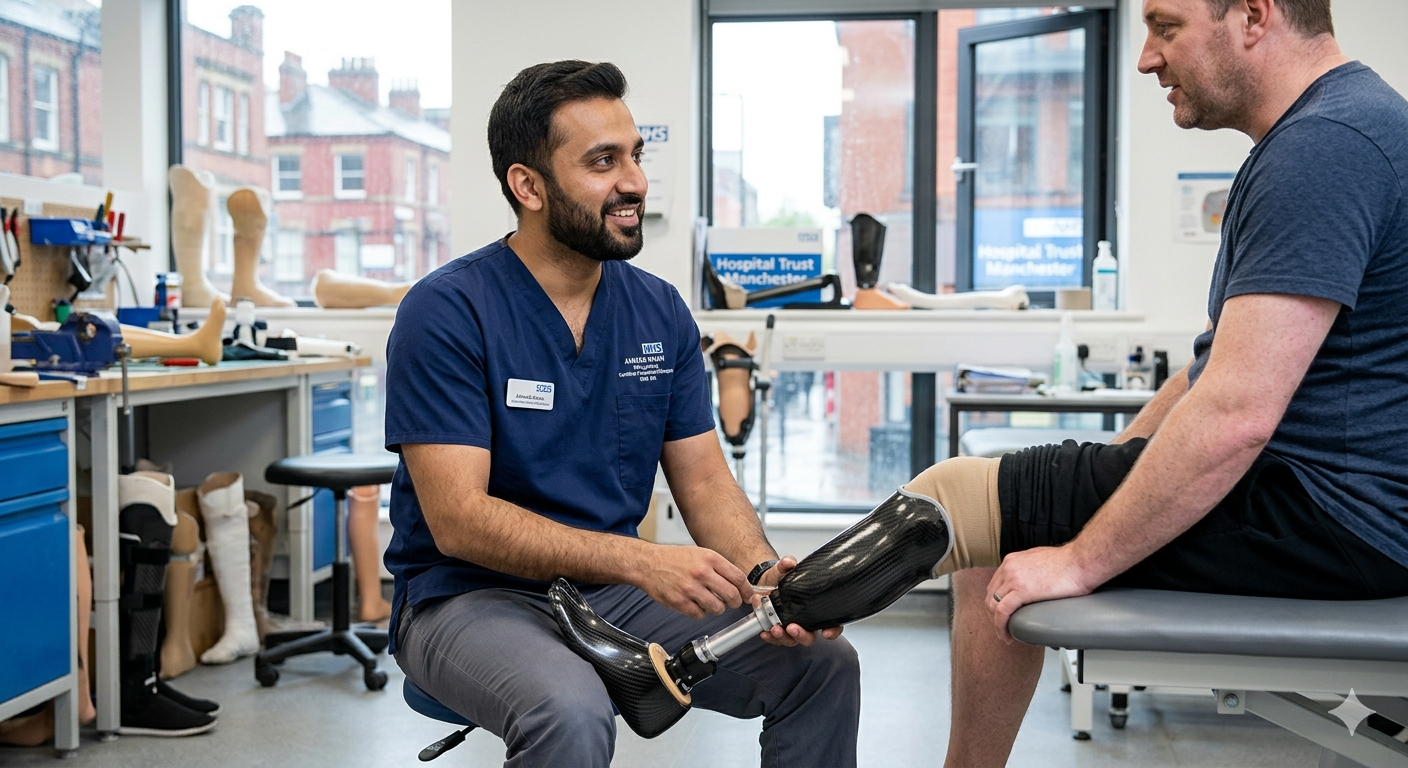
First, a quick and simple explanation. Orthotics involves making and fitting braces or supports that help support weak or injured parts of the body, like legs, backs, or arms. These devices improve movement, correct alignment, and reduce pain. Prosthetics, on the other hand, means creating artificial limbs for people who have lost a part of their body due to accident, disease, or birth conditions. Professionals in this field assess patients, design custom devices, fit them properly, and follow up to make sure everything works well.
Why does this field feel so rewarding? Because you get to see real changes in people’s lives. Someone who couldn’t walk might regain mobility with a well-made brace or prosthetic leg. It’s a mix of science, hands-on skills, and caring for others.
Around the world, this profession is well-established in many countries. In places like the UK or the US, students often complete bachelor’s or master’s level training that includes classroom learning and lots of practical experience in clinics. Programs focus on anatomy, materials science, patient care, and technology. International standards, like those from the International Society for Prosthetics and Orthotics (ISPO), help keep the quality high so that devices truly help people.
Now, let’s talk specifically about Pakistan. The good news is that opportunities to study orthotics and prosthetics have been growing here. One of the well-known places is the Pakistan Institute of Prosthetic and Orthotic Sciences (PIPOS) in Peshawar. They offer a 4-year Bachelor of Science (BS) degree in Prosthetic and Orthotic Sciences. This program includes eight semesters and is affiliated with Khyber Medical University. It has recognition from ISPO, which is a big plus because it meets international-level standards. Rawalpindi Medical University, KEFUIT Rahim Yar Khan, DUHS are also Degree awarding universities.
Other institutions are also stepping up. For example, the Pakistan Institute of Rehabilitation Sciences (PIRS) under Isra University has offered admissions for BS Prosthetics and Orthotics. Places like the National University of Medical Sciences (NUMS) in Rawalpindi run a BS in Prosthetics & Orthotics that gives students knowledge and practical skills for designing, fitting, and managing these devices. The University of Lahore and Shifa Tameer-e-Millat University have also introduced similar programs.
What do these degree programs usually cover? You’ll start with basic subjects like anatomy, physiology, and biomechanics – understanding how the human body works. Then you move into more specific topics such as materials used for devices, patient assessment, casting and molding techniques, and fitting prosthetics or orthotics. There is usually a strong focus on hands-on training, workshops, and clinical practice so you learn by doing, not just reading. Some programs include internships or attachments in hospitals and rehab centers.
Is a full degree the only way? Not always. There are also diploma or shorter certificate courses available through places like PIRS or vocational training programs. These can be good entry points if you want to start working sooner, though a bachelor’s degree opens more doors for professional growth and better positions.
Who can apply for these programs in Pakistan? Most BS programs ask for F.Sc (Pre-Medical) or equivalent with decent marks, often around 60% or as per the university’s rules. Age limits and entry tests may apply, so it’s smart to check the latest admission notices on university websites or through bodies like Khyber Medical University for their Centralized Admission Test (CAT).
What about after graduation? In Pakistan, graduates can work in government hospitals, private clinics, rehabilitation centers, or even start their own setups with experience. There is demand because of road accidents, diabetes-related amputations, polio effects in the past, and other health issues. Professional bodies like the Pakistan Association of Prosthetists and Orthotists (or similar regional groups) help with networking and standards.
Challenges exist, of course. Like many fields in our healthcare system, there can be issues with resources, awareness, or advanced training opportunities. But more programs are coming up, and the field is gaining recognition. Many professionals also look for further studies, like MS programs in Rehabilitation Sciences with a focus on prosthetics and orthotics.
Thinking of joining this field? Here’s some friendly advice: Talk to current students or professionals if you can. Visit a rehab center to see the work up close. Build a strong base in science subjects during your intermediate studies. Stay patient and detail-oriented because this job requires precision – a small mistake in fitting can affect someone’s comfort and mobility.
The website oppak.com is a great resource for updates on admissions, scholarships, jobs, and news in this field. Keep checking there for the latest.
If helping people regain movement and confidence sounds meaningful to you, a degree in orthotics and prosthetics could be a solid, purposeful choice in Pakistan. Start by researching the programs that interest you, prepare well for admissions, and take that first step. You’ll be part of a growing community that makes a real difference every day. Good luck!
OPPAK is Pakistan's dedicated hub for orthotics and prosthetics since 2006— connecting students, professionals, patients and employers with credible news, education pathways, jobs, and success stories.
Related in Career Guidance
Leave a Reply