CHAL Foundation Hosts Final-Year DPT Students from Midwest Institute of Sciences for Rehabilitation Learning Visit
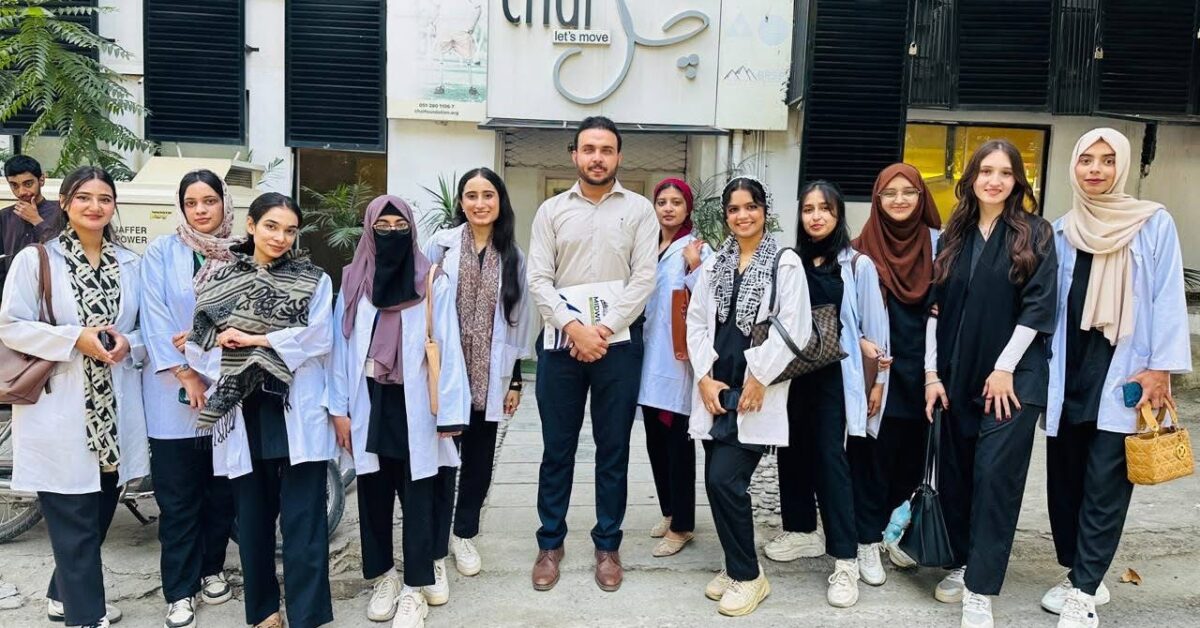

Islamabad: CHAL Foundation hosted final-year Doctor of Physical Therapy (DPT) students from Midwest Institute of Sciences, Islamabad, as part of their academic learning programme, providing valuable exposure to prosthetic and orthotic technologies and rehabilitation practices.
Midwest Institute of Sciences is an Islamabad-based educational institution offering health sciences programmes, including the five-year Doctor of Physical Therapy degree. The institute is led by its CEO, Mr. Zia Ur Rahman, a qualified healthcare professional and American Board certified orthotist and prosthetist.
With an academic and professional background spanning orthotics, prosthetics, and healthcare leadership, Mr. Zia Ur Rahman brings relevant expertise to the institute’s healthcare education environment. His professional specialisation aligns closely with the importance of practical clinical learning, rehabilitation knowledge, and the development of skilled healthcare professionals.
The visit to CHAL Foundation provided students with an opportunity to connect classroom learning with real-world rehabilitation practices. Through demonstrations and discussions, students learned about prosthetic and orthotic devices, their applications, and the role of physiotherapists in supporting patients throughout their rehabilitation journeys.
CHAL Foundation is a non-profit organisation working to improve access to rehabilitation services and assistive devices for people with physical disabilities. Its services include prosthetic limbs for individuals with limb loss, orthotic devices to support skeletal and musculoskeletal conditions, and mobility aids such as wheelchairs and crutches for people with mobility limitations, including those living with spinal cord injuries.
The foundation operates in Islamabad and Azad Jammu and Kashmir and contributes to rehabilitation initiatives designed to help individuals improve mobility, independence, and participation in daily life.
According to a profile published by the NGO directory NGOBase, CHAL Foundation has treated more than 60,000 patients and distributed over 131,000 assistive devices across Pakistan and Azad Jammu and Kashmir. These figures reflect the scale of its reported work in supporting people who require rehabilitation and assistive technologies.
The foundation has also contributed to rehabilitation initiatives beyond its primary areas of operation. In 2014, CHAL Foundation entered into a three-way agreement with the International Committee of the Red Cross (ICRC) and the Indus Hospital Network to establish physical rehabilitation centres in Muzaffargarh, Karachi, and Lahore. Under the arrangement, CHAL was responsible for operational management, technical and medical staffing, and on-the-job training.
In Balochistan, the Pakistan Poverty Alleviation Fund engaged CHAL Foundation to provide modular prostheses and orthoses to 500 children with disabilities in Quetta. These initiatives highlight the importance of partnerships in expanding access to specialised rehabilitation services and assistive devices.
During the educational visit, CHAL Foundation staff introduced students to different prosthetic and orthotic devices and demonstrated aspects of prosthetic limb assembly and fitting. Students also learned about the foundation’s rehabilitation services, the range of assistive devices it provides, and the importance of individualised rehabilitation plans.
The session highlighted how prosthetic and orthotic interventions can support people with limb loss, physical impairments, and mobility challenges. Students gained a broader understanding of how these technologies work alongside physiotherapy to help patients achieve better functional outcomes.
Physiotherapists play an important role in rehabilitation following the provision of a prosthetic limb or orthotic device. Their responsibilities may include gait training, balance exercises, muscle strengthening, functional mobility training, and helping patients adapt safely to their devices.
For final-year DPT students, this practical exposure offered an opportunity to understand the multidisciplinary nature of rehabilitation and the collaboration required among physiotherapists, prosthetists, orthotists, and other healthcare professionals.
Strengthening Healthcare Education Through Collaboration
Educational visits to rehabilitation centres help bridge the gap between classroom learning and clinical practice. They allow students to observe the application of healthcare technologies, understand the needs of patients with disabilities, and appreciate the importance of compassionate, patient-centred care.
Midwest Institute of Sciences expressed its gratitude to CHAL Foundation for facilitating the visit and providing students with this valuable learning opportunity.
The engagement underscores the importance of collaboration between academic institutions and rehabilitation organisations in preparing future healthcare professionals. Exposure to specialised rehabilitation services enables students to develop a more comprehensive understanding of assistive technologies, patient recovery, and the practical responsibilities of healthcare practitioners.
The visit to CHAL Foundation served as a meaningful learning experience for the students, highlighting how rehabilitation services, assistive technologies, and multidisciplinary teamwork can contribute to greater independence and an improved quality of life for people with disabilities.
OPPAK is Pakistan's dedicated hub for orthotics and prosthetics since 2006— connecting students, professionals, patients and employers with credible news, education pathways, jobs, and success stories.
Related in Campus News
University of Lahore Hosts Prosthetics & Orthotics Training Session for Gaza’s Visiting Medical Students
IPMR Peshawar’s P&O Students Gain Hands-On Clinical Exposure at Paraplegic Centre

Leave a Reply